

Philips Design Challenge
Designing a customizable and tailored product for teens to improve their sleep

Date | October 2018
Timeframe | 4 weeks
Client | Philips Sleep & Respiratory Care
Team| 6 people multidisciplinary team
Area| User Research • Product Design
Tools| Illustrator • Solidworks
Process
(click to jump to page section)


-
Summary
-
Problem Statement
-
Background research
-
User Research
-
Project Goal
-
Project Focus
-
Value Proposition Summary
-
Minimum Viable Product
-
Data flows
-
Device activation timeline
-
Use case study
Summary
This was a part of a challenge hostel by the Philips Sleep and Respiratory care team. The problem was to design a product or service that Philips can offer specifically for teens that is customizable, tailored to their
needs, and will both raise awareness and improve their sleep? We examined the lifestyle and sleep patterns of teenagers in the United States by conducting interviews and surveys with teens and their guardians. We brainstormed on ideas for a product to educate teens on the importance of healthy sleep patterns and enable them to track and improve their sleep health. Finally we designed a customizable device involving zero-UI called “Halo” which will allow teenagers to trace their sleep, get insights on sleep patterns and improve their quality of sleep by utilizing the human body’s neural reaction to various stimuli to help create a psychological and physiological shift towards a state of sleep.
Problem Statement
What products or services can Philips offer specifically for teens that are customizable, tailored to their needs, and will both raise awareness and improve their sleep?
Background Research- Philips
Concerning figures about teens and sleep
For teens, each hour of lost sleep has been associated with a 38% increase in the odds of feeling sad and hopeless, a 42% increase in considering suicide, a 58% increase in suicide attempts and a 23% increase in substance abuse.
Teenagers are the least likely of any age group to be getting sufficient rest. About 87% of American high school students are chronically sleep-deprived.
According to the CDC, insufficient sleep is a public health problem, which estimates that 30% of working adults in America consistently sleep less than 6 hrs per night = 19 million people in America alone
Students with an average of 6 hours of sleep per weeknight are over 60% more likely to be depressed or have symptoms of depression.
Teenage short sleepers gain more weight and overall are 58% more likely to become overweight or obese.
Sleep-deprived drivers cause more than 100,000 traffic accidents and 6,400 deaths each year, with 55% of the sleep-related crashes caused by drivers under the age of 25.
Why do teens get such poor sleep?

caffeine
consumption
school start
times
employment
status
puberty changes in circadian
rhythm
sleeping
disorders
sleep
environment
increased
media
screen-time
parental/peer
relationships
and sleep
social
interaction
How does sleep deprivation affect teens?

fighting and
other violence
conduct
problems
academic
misconduct
substance
abuse
obesity
mental
health
disorders
drowsy
driving
User Research
Questions asked
We asked the questions below to twelve teenagers from the age group 13-18 years age group and two
parents:
-
How many hours of sleep do you get daily?
-
What do you do an hour before sleeping?
-
Why do you do what you do?
-
How does your body tell you it's sleep time?
-
Do you feel rested when you wake up?
-
Are you able to focus in class?
-
What items help you sleep?
-
How do you usually wake up?
-
Do you wake up in the middle of the night? Why?
-
What factors affect your hours of sleep?
Insights
-
Most teenagers had trouble falling asleep at night.
-
Many teenagers didn’t feel rested when they got up in the morning which affected their functioning during their day, such as the inability to focus in class, feeling tired, and distracted.
-
Different teens had different preferences of items which helped them sleep, the most common being their mattress, pillows, bed sheets, stuffed animals etc.
-
Most teenagers and parents preferred a more hands-off experience of falling asleep.
-
Most teenagers and their parents were not comfortable using a high tech object

Project Goal
Teenagers are the end-users, but it’s most likely parents who will buy Halo. We realized that both groups would have different concerns and motivations for choosing the product. So we decided to position the product in a way that is appealing to teenagers to use and for parents to buy.
Reluctance to use a high-tech product
Our product should be simple and intuitive to use, without a steep learning curve and with human-centered design aesthetics to not intimidate our young users.
Not feeling rested after waking up
In addition to helping them fall asleep, our product also needs to improve their quality of sleep, by working towards a solution that syncs various biological and mental cycles.
Trouble falling asleep at night
Our product must help teenagers relax and fall asleep with minimum interaction with the app or the device, hence reducing the cognitive load.
Differences in preferences amongst teenagers
Our product must be customizable to cater to a wider range of teens with a wide range of preferences.
Tackling the reluctance to buy a new product
Our product needs to integrate effortlessly into the lives of teenagers without having to burden them with a new product that they have to physically use.
We wanted to have a holistic experience in improving the sleep quality of teenagers, so decided to focus on all phases of sleeping- Pre-sleep, During sleep and Post-sleep.

Pre-sleep
Improve the experience of falling asleep.
During sleep
Improve the quality of sleep.
Post-sleep
Improve the experience of waking up.
Project Focus
We decided to focus our project on utilizing the human body’s neural relation to various stimuli to help create a psychological and physiological shift towards the state of sleep.
Aromatherapy
Scents to sleep (lavender, chamomile), to wake (citrus, mint). Our olfactory sense is the strongest sense because of its ability to integrate itself into a person’s subconscious. Thus, even without realizing, it influences a teenager while they are sleeping and continues to do so as they wake up. That being said, our product will selectively emit fragrances that trigger emotions that help teenagers sleep peacefully. [1]
Sound
Halo plays white and pink noise to trigger and improve sleep states. For sleep, white noise is most commonly used; it resembles natural noises playing in the background and helps create a sense of comfort to relax the brain. We then generate bursts of Pink noise during the second stage of sleep, also called deep sleep This prolongs the duration of deep sleep and increases the quality of sleep, thereby helping the user to wake up feeling rested. This has also been linked to improvements in memory. Short bursts of pink noise are based on natural sounds and given to the user in irregular intervals to not get accustomed to it. If a user were accustomed to pink noise, the brain would stop recognizing pink noise. [2-5]
Light Therapy
We utilize the effect of Light on the Human Circadian Rhythm to gently correct sleep cycles. Melatonin suppression caused by light is the core of much of the research that links nighttime light to the poor quality of sleep. By using light at the right intensity, color, and time (based on data recorded and analyzed), our product stimulates the brain to wake up properly, thus creating an effective cycle of sleeping and waking. We will incorporate an ambient lighting module in our project to help facilitate light therapy. [6,7]
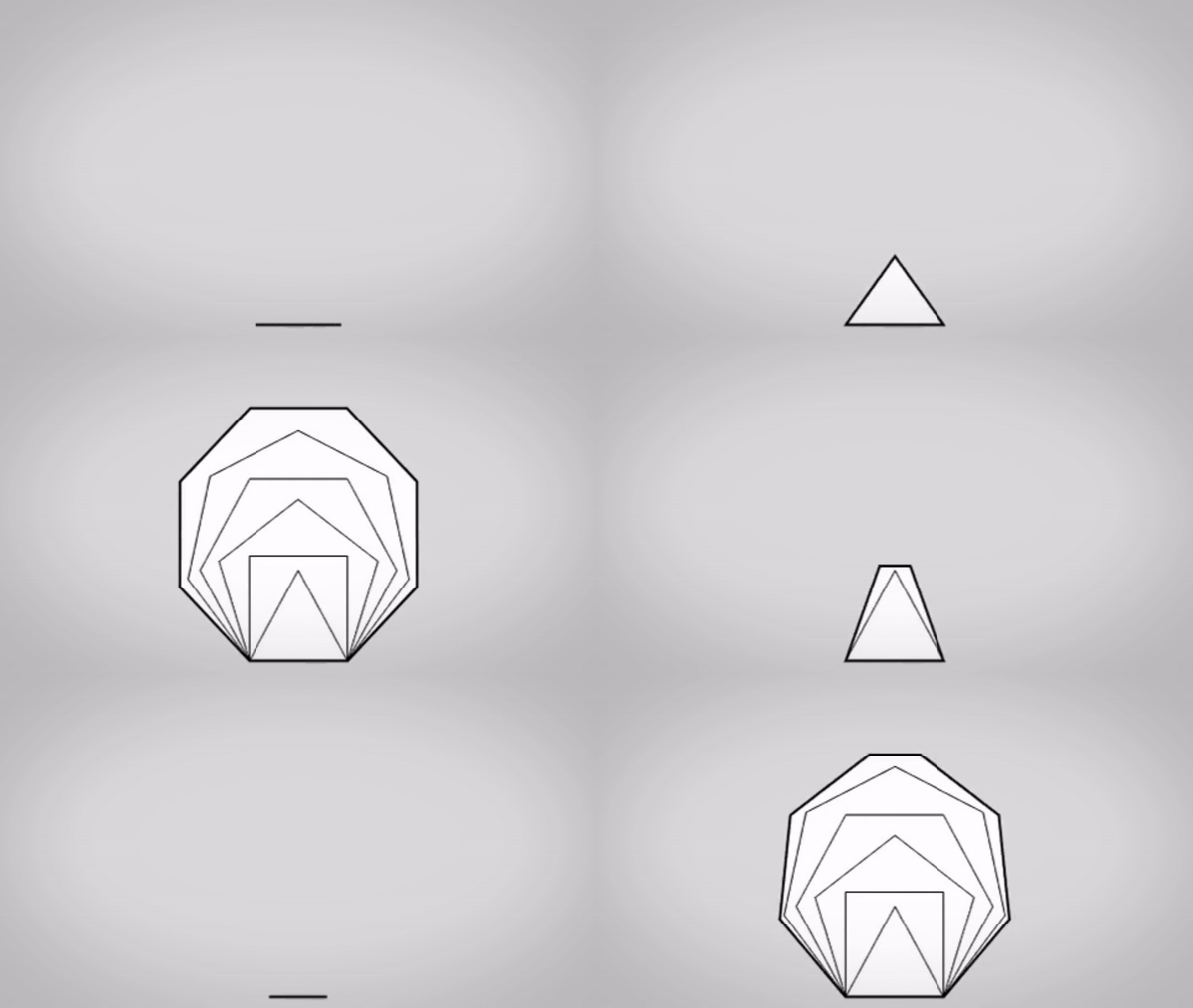
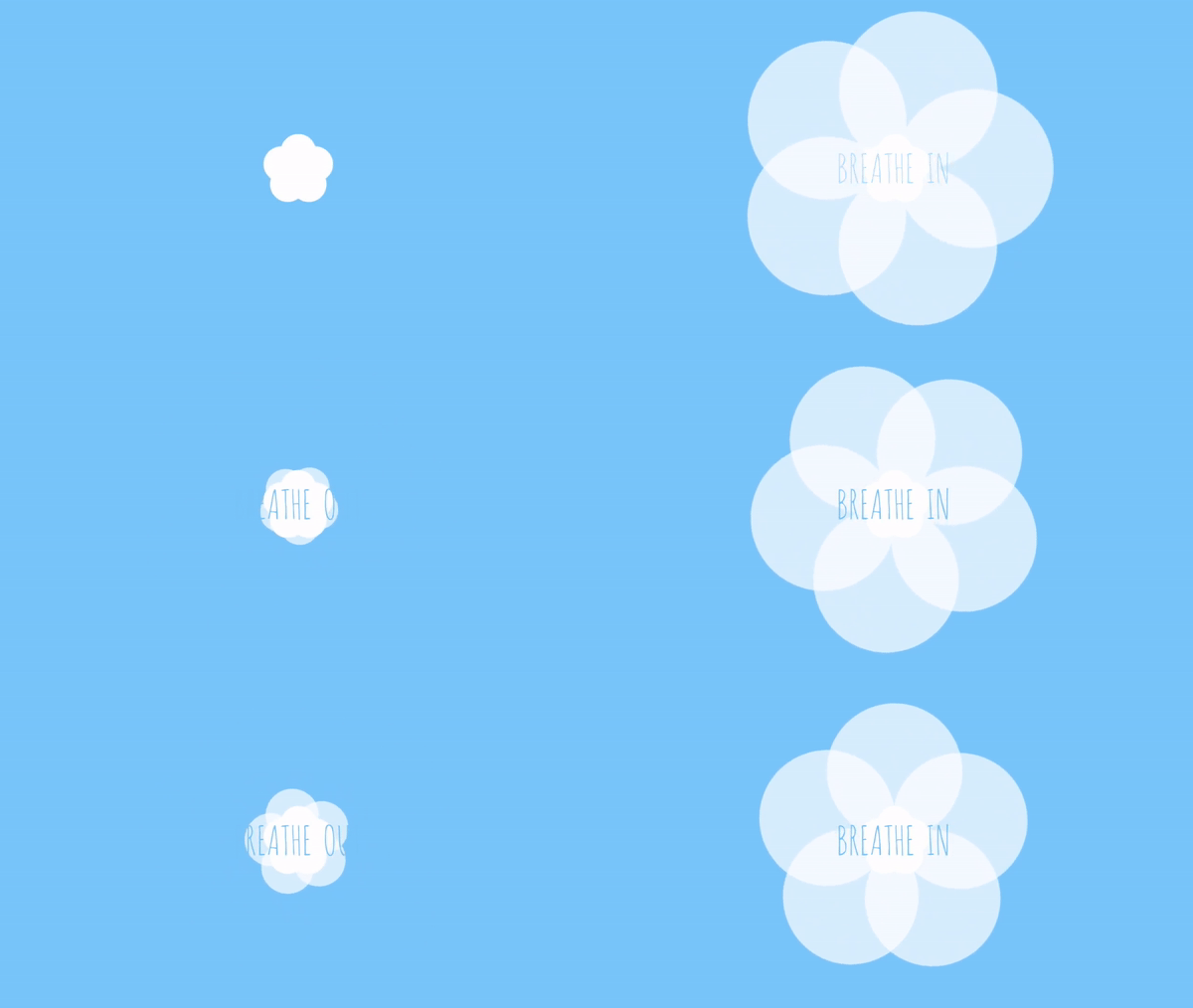
We will also incorporate a mechanism to project moving images on the wall to help users calm down and start regulating their breathing patterns. (videos for representational purposes only)
Value Proposition Summary
Based on the background research, user research, the finalized project goal, project focus and challenge problem statement, we built our Value Proposition Summary.
Our target are teenagers who either struggle to sleep or would like to improve the quality of their sleep, along with parents who are concerned with the well-being of their children
We will provide a tangible product involving zero-UI- zero or minimal interaction. It will integrate meditative light, sound, aroma, and light therapies to enhance the teenagers' ability as well as the quality of sleep.
So that teenagers can go to sleep with ease and comfort. Additionally, they can wake up with a sensation of feeling relaxed, motivated, and positive, which benefits teenagers mentally, socially, and physically.
Target
Functional
Benefit
Emotional
Benefit
Minimum Viable Product- Halo
Halo, a technology that utilizes a Zero UI approach, is designed to utilize the human physiology to allow teenagers to fall asleep peacefully and enhance the quality of their sleep. In order to do so, Halo integrates three of the most influential factors, sound, aroma, and light therapies, to assist and improve the quality of sleep. Halo provides these three factors in a strategic manner by capturing physiological data and relating it to the most appropriate light, sound, and fragrance that best aligns with the teenager’s sleep cycle.
Components of the Product
Halo device
A small modular Bluetooth enabled device with multiple built-in components:
-Small projector to project images on the wall
-Light for ambient lighting
-Speaker to play white/pink noise
-Microphone to accept user voice input
-Diffuser
-Oil storage compartment to refill oils
-LCD screen to show time or to indicate when the oil compartment needs to be refilled.

Halo strip
Halo captures data about the teenager’s temperature, pressure, and heartbeat via a Halo sensory strip which is placed across the bed of the user. The strip is thin and the fabric is a light cotton-based material to make the strip seem as natural as possible when the user lies on top of it. The strip takes in user vitals and transmits it to the Halo device using Bluetooth technology.


Halo phone app & website
The Halo phone app or website allows the user to view the history of their sleep cycles and quality of sleep cycles, statistics about their sleep health and customized suggestions on how to improve their sleep patterns.
In addition, the app or website allows them to actively set in preferences about certain smells, lights or sounds that they prefer.
How did you sleep last night?
You went through 5 complete cycles of sleep yesterday.
Good Job! Keep at it!

NREM 1
NREM 2
REM
NREM 3
Your weekly sleep summary

How have you been sleeping this year?

January
February
March
April
May
June
Data Flows
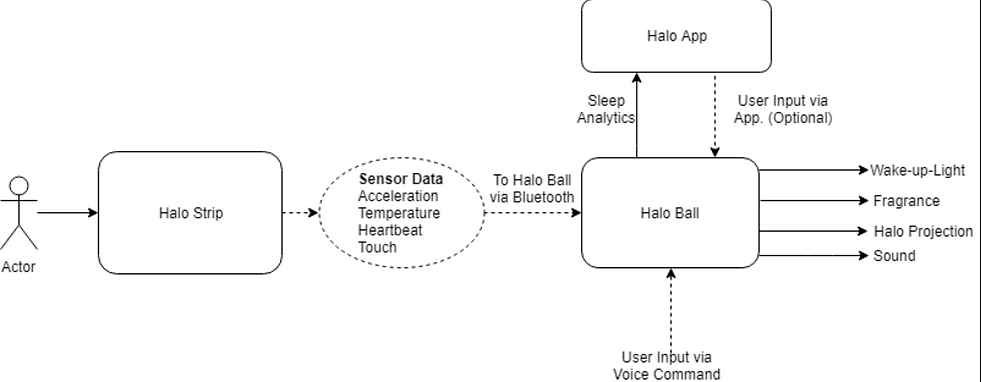
Input to the Device
- Information about vitals is sent from the Halo Strip to the Halo device via bluetooth.
-The user can also pre-set in preferences via the mobile app or the website.
-The user can actively set preferences depending on their mood that day, via voice commands.
Information Processing
Once the data about vitals is received by the Halo device, it processes the information along with the pre-set preferences and the active preferences set by voice (if any), and comes up with a sleep plan for that user for that day. It then converts the plan to the most appropriate light, sound, and fragrance that best aligns with the teenager’s sleep cycle at that point of time.
Output
The Halo device starts implementing the finalized plan for the day by periodically activating different components of the device. Teenagers go to sleep with ease and comfort. Additionally, they can wake up with a sensation of feeling relaxed, motivated, and positive, which benefits teenagers mentally, socially, and physically.
Device Activation Timeline
Depending on the sleep plan finalized, different components of the device will get activated at different points of time.
Post-sleep
Improve the experience of waking up.
During sleep
Improve the quality of sleep.
Pre-sleep
Improve the experience of falling asleep.
-
Meditative ambient Halo light
-
Projections to regulate breathing
-
Aroma to help sleep
-
White noise to help sleep
-
Pink-noise at irregular intervals to improve sleep quality
-
Wake-up Light at optimal time according to sleep cycle
-
Aroma to feel fresher
Use Case Study
Sample Persona

Anne Anderson
Age- 16
Occupation- Student
Location- Pittsburgh, PA
Bio-
Anne is a student at the Environment Chartered School of Pittsburgh. She is a regular student and has regular classes every day. In the evenings she goes for dance lessons.
Goals
-
To excel at her school and get good grades
-
To excel at her dance lessons
-
To be physically fit
-
To be happy and healthy
Frustrations
-
Too much homework keeps her up late at night
-
She is irritable the next day due to lack of sleep
-
She feels tired and cannot focus in school
-
She has lesser stamina in the evenings at dance class
-
Her bad mood affects her friendships and relationships
-
Even when she does sleep, she keeps tossing turning and waking up
Motivations
-
She would like to get more hours of sleep to be better rested and be able to focus on class
-
She would like to get better quality sleep so as to maximize utilization of sleep time
-
She would like someone to help her through the process
Scenario
Start
Setting active preferences
Immediate sleep assistance
Sleep customization
Breathing regulation
Auto-turnoff
Sleep maintainance
Customized wake up
Statistics and feedback
Anne wants to sleep after a tiring day.
She lies on her bed and the Halo Strip starts capturing vital body information and relays it to the Halo Ball.
She uses voice commands/app to set her alarms, wake up light and aroma for the next morning.
Anne has trouble falling asleep. She knows she can ask the Halo Ball though voice command (also App if preferred) to help her fall asleep in the following ways:
“Halo, help me sleep.” (turns on all preferences)
“Halo, switch on diffuser.” (sleep aroma)
“Halo, switch on speaker.” (white noise)
“Halo, switch on halo.” (via projector)
Anne turns on all her customized preferences of Halo (lavender scent is diffused while quiet white noise is played in the background).
She regulates her breathing based on the continuous expansion and contraction of the halo-like light projected on the ceiling.
The soothing environment helps her fall asleep. Strip senses this and shuts off the components.
According to her preferences and timing, the Halo Ball speaker also plays pink noise during her deep sleep.
Her customized wake up light option (sunrise-like effect over 30 minutes) helps her wake up at an optimal time according to her sleep cycle, feeling fresh and rested in the morning.
She checks her sleep statistics and trends on the App and notes that she has been getting more hours of good-quality sleep gradually.
Appendix
References
-
Buchbauer, G., & Jirovetz, L. (1994). Aromatherapy—use of fragrances and essential oils as medicaments. Flavour and Fragrance journal, 9(5), 217-222.
-
http://www.berkeleywellness.com/healthy-mind/sleep/article/pink-noise-sleep
-
The effects of light therapy on sleep problems: A systematic review and meta-analysis. Sleep Med Rev. 2015 Sep 9;29:52-62
-
Cognitive Behavioral Therapy as an Adjunct Treatment to Light Therapy for Delayed Sleep Phase Disorder in Young Adults: A Randomized Controlled Feasibility Study. Behav Sleep Med. 2015 Aug 5:1-21.